Blazor Simple AI Project – Chat with Microsoft Azure Open AI

Welcome to the Blazor Simple AI Single Page App, the AI App that responds to questions instantly using Microsoft Azure OpenAI Services. This document explains the .NET project I developed which I have pushed to my public Github repository which is available here: https://github.com/tejinderrai/public/tree/main/BlazorSimpleAI.

If you wish you to download the PDF version of this blog post, it is available here.

Technologies

Blazor Simple AI is made up of the following technologies:

  • Microsoft .NET Blazor (.NET 6.0 LTS release)
  • Microsoft Azure.AI.OpenAI .NET Library
  • Microsoft Azure AI Services – OpenAI

It’s that simple!
A screenshot of a computer

Description automatically generated

Why Blazor?

Blazor is simply amazing, I have been developing Blazor projects for over four years. There has been great demand for Blazor over the past few years and as a component framework and use of C# this is exactly what I need to develop solutions and concepts super fast!

What Blazor Simple AI Does?

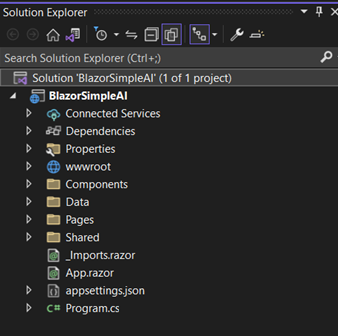
Blazor Simple AI is a Blazor server side single page app which has a single page and a single component. The razor page has two basic user interface controls, a textbox and a submit button for a user to enter the question for Azure OpenAI. The component “AzureOpenAIChat.razor”, has a single parameter which receives the question from the main index page. When the parameter is received by the child component, the component has OnParametersSetAsync() method which then retrieves the appsettings.json values in relation to the Azure OpenAI service AI endpoint, Azure OpenAI key and the deployment name which has the associated model, which was deployed with Azure AI Studio, then send the text to the Azure OpenAI service and retrieves and displays the response.

Core Blazor Template Changes

There have been some basic changes to the basic Blazor layout to accommodate the project. These are as follows:

  1. The sidebar has been removed from the MainLayout.razor page
  2. A new Index.razor.css style sheet has been added to centre the UI components on the page
  3. A new Components folder has been added to the project
  4. A new component named AzureOpenAIChat.razor has been added into the Components folder
  5. A new configuration section has been added to appsettings.json to include the configuration required for the project to interact with the Azure OpenAI service.
  6. The title and main element have had text changes to represent the project name and description

Steps to Deploy Azure Open AI

  1. Create an Azure Resource Group
  2. Deploy the Azure OpenAI service in the resource group, see: How-to: Create and deploy an Azure OpenAI Service resource – Azure OpenAI | Microsoft Learn
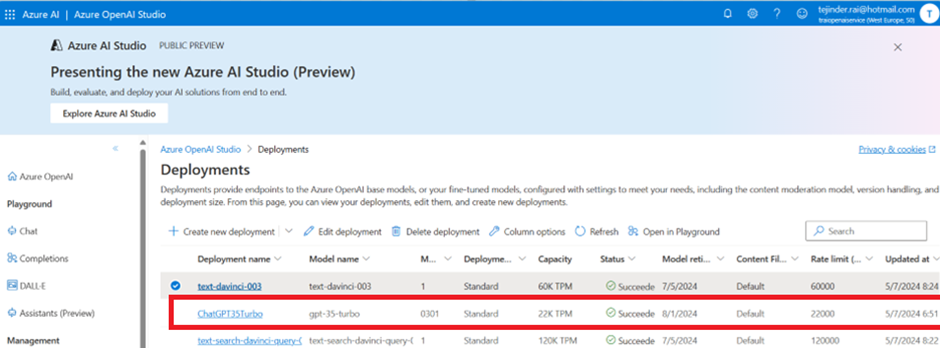
  3. Manage Deployments in Azure AI Studio and create a deployment using the gpt-35-turbo model
A screenshot of a computer

Description automatically generated
  • Update the appsettings.json with the settings
"AzureAIConfig": {
    "OpenAIEndpoint": "https://[You Azure OpenAI Service].openai.azure.com/",
    "OpenAIKeyCredential": "[Your Azure Open AI Key]",
    "OpenAIDeploymentName": "[Your Azure Open AI Deployment Name]"
    "RetroResponse": "true or false"
}
  • Build the project and ask Azure OpenAI anything you like.


The UI

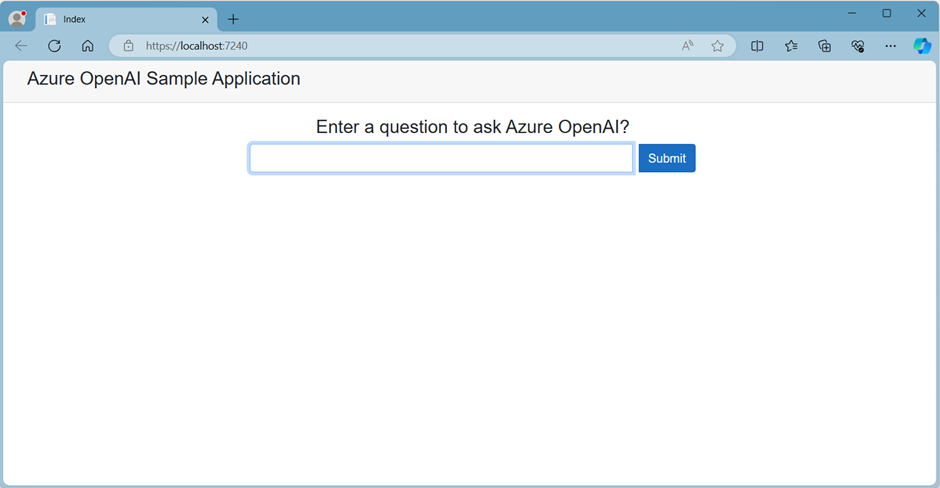
The landing page.
Sample Questions and Responses

Question 1

Who founded Microsoft?

A screenshot of a computer

Description automatically generated

Question 2

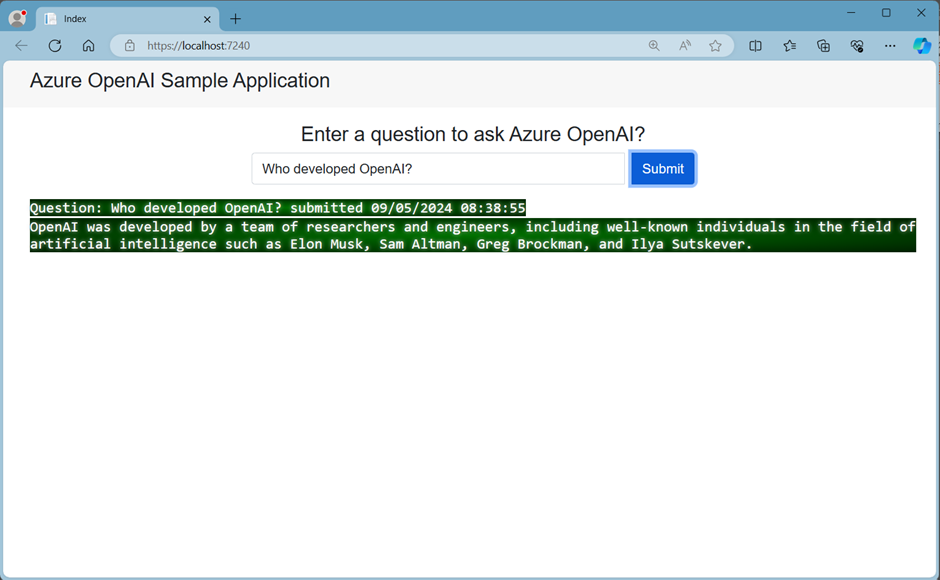
Who developed OpenAI?

A screenshot of a computer

Description automatically generated

Question 3

How can I develop a Blazor App?

A screenshot of a computer

Description automatically generated

Basic CSS

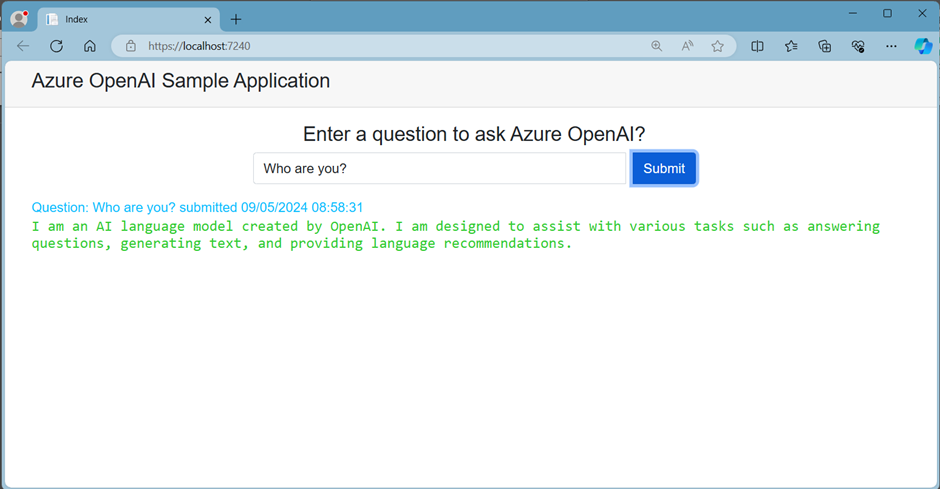
The AzureOpenAIChat.razor component has a basic CSS style sheet which allows the deployment to have a retro style response or a basic response text visualization option. If the app setting below is set to true, you will get the retro response as per the sample above. For a standard non-retro style response, you can set the value to false, example below.

"AzureAIConfig": {
     "RetroResponse": "false"
}
CarShop .NET Core Blazor Project – Part 7

Following on from Part 6, where I provided the views of the components I developed to enter, display and edit data, I am soon going to publish the source code in my GitHub repo.

What have I been up to recently….

I’ve been working on a number of projects recently, from event driven architecture application design, integrations with Oracle e-Business suite, Azure Event Hubs, Azure Function Apps, API Apps, Microsoft Anti-Malware for Blob storage, event receivers and processors, Cosmos DB as a store for events, integration with Adobe Cloud and multi-tenant auth provider Blazor projects.

What’s coming next…

It’s also time for me to refresh my Xamarin Cloud Release project which I published to Google play a few years ago with a complete refresh using a .NET MAUI Blazor Hybrid app. This will also mean migrating and updating the MySQL datastore included in the project.

I believe it’s also time to refresh my blog post format, so there is a standard format moving forward for every blog post, so I have recently created a template for this exact purpose. In addition, I believe it is also time to move away from articles describing coded solutions for Blazor projects, to also include general Microsoft Azure architecture and recent updates in smaller short focused pieces more frequently. After all, I am a Microsoft Cloud Solution Architect!

I’ve been quite busy with all those projects and now I am going to ensure that some of the project learnings and configuration, including the architecture, is going to be part of the next set of blog posts. In addition, I have an exciting new project which I had shelved previously that I think it’s now time that It was code complete and then hosted in Microsoft Azure, so watch out for my announcement in the coming months.

CarShop .NET Core Blazor Project – Part 6

CarShop .NET Core Blazor Project – Part 6

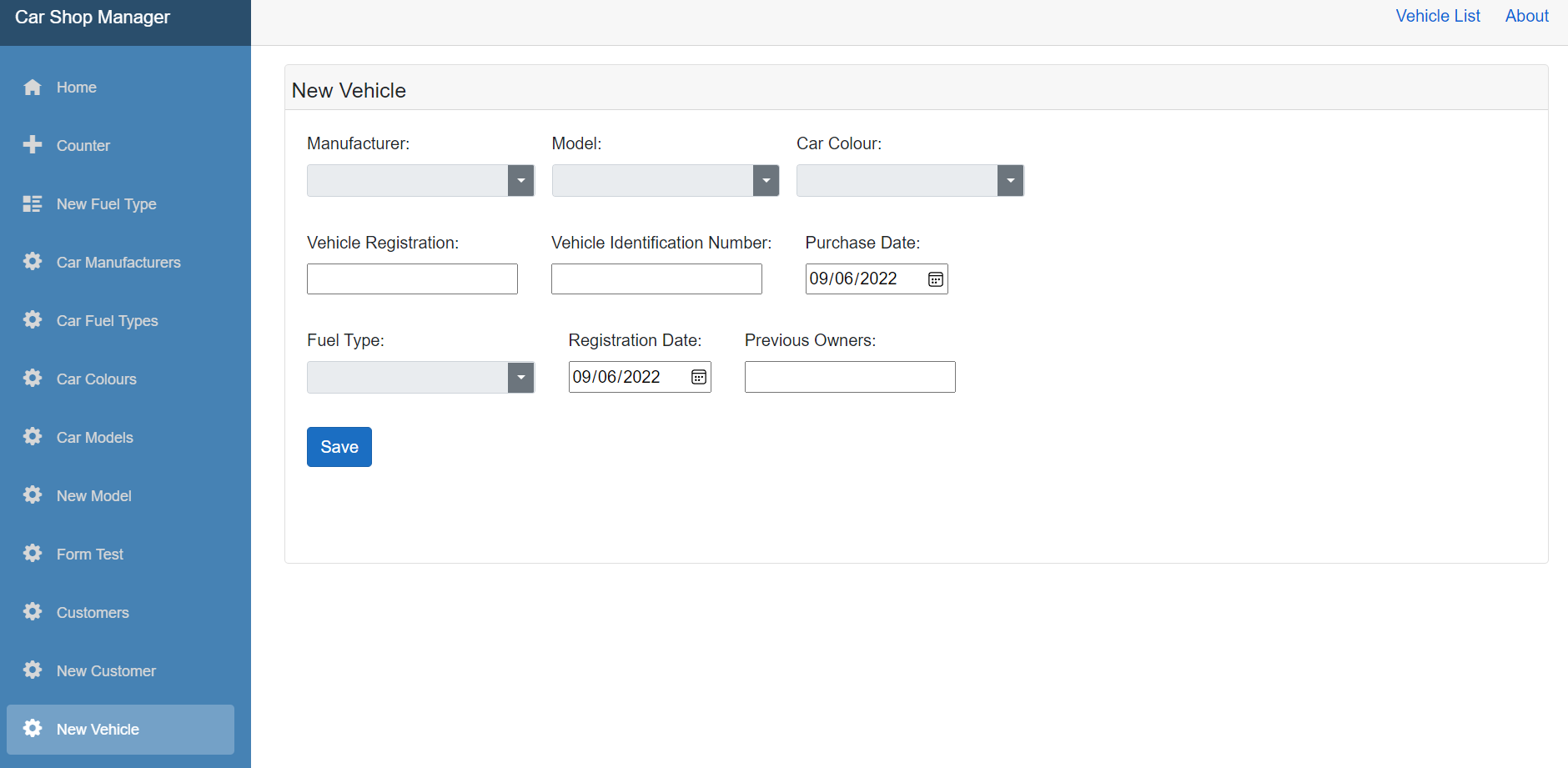
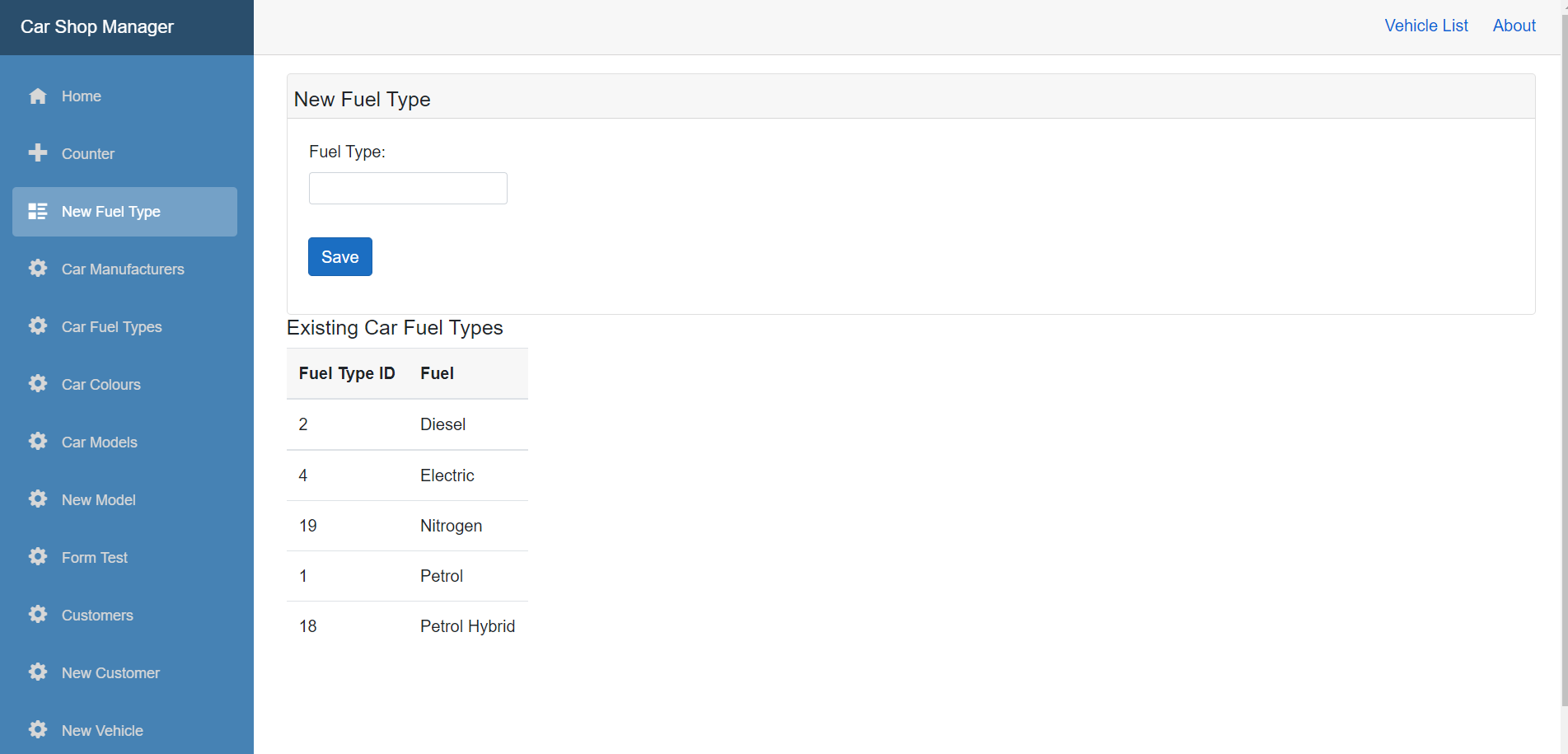
Following on from Part 5, where I provided the links to the CarShop C# project which defines the data model classes for the CarShop database tables and views, I have recently been working on the core components which interact with the entity framework to add data to the Azure SQL CarShop database. There are a number of components which are being developed and I focus on these so that I can start to build out the forms and the interactions from a user experience including the layout of the edit forms and controls. I haven’t yet published the source code onto my github repo, but I expect to do this in the next few months. For now, I’ve have provided a preview of the form layouts and basic capabilities whilst I complete the forms and capabilities, including the completion of testing the components.

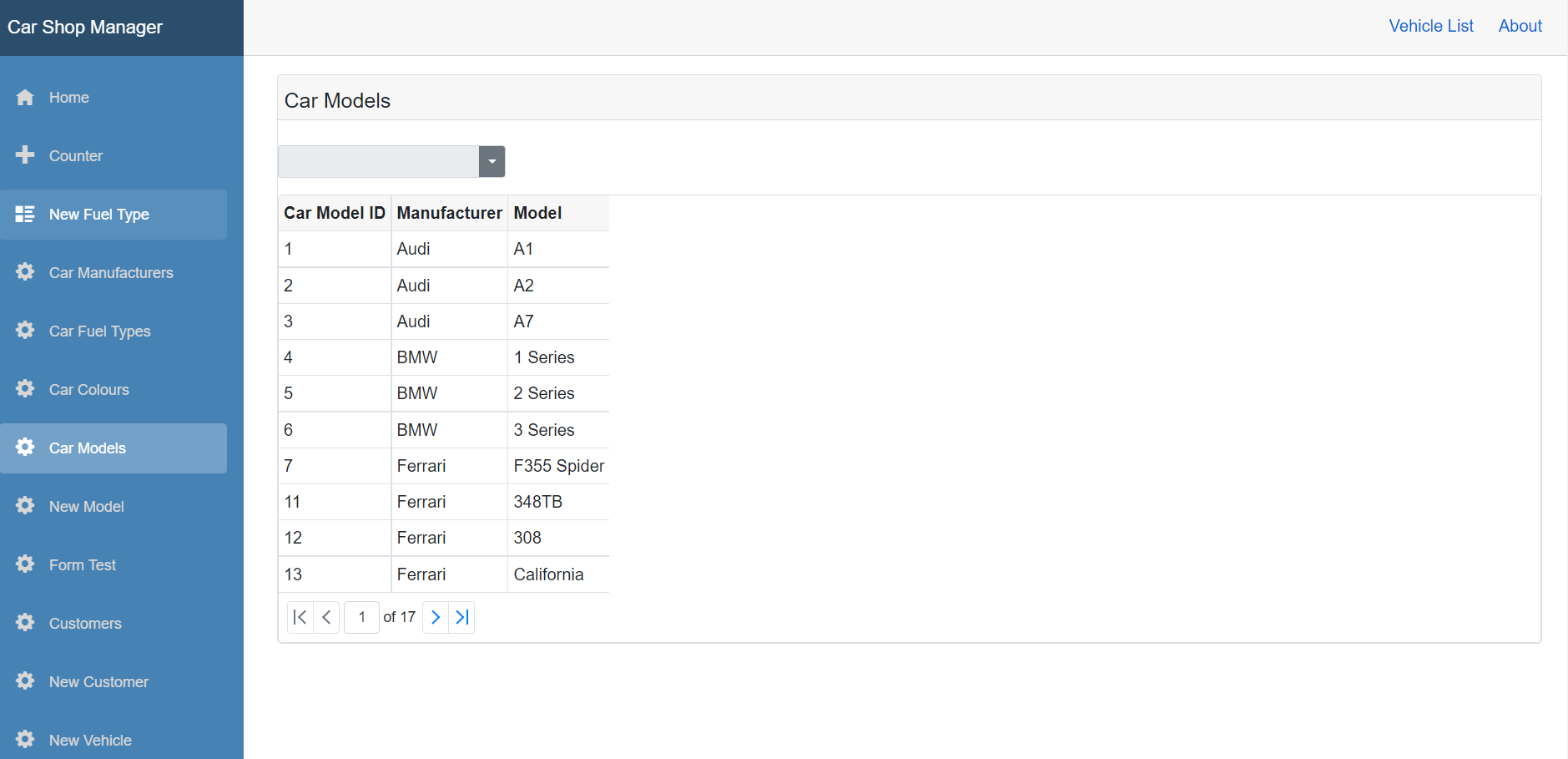
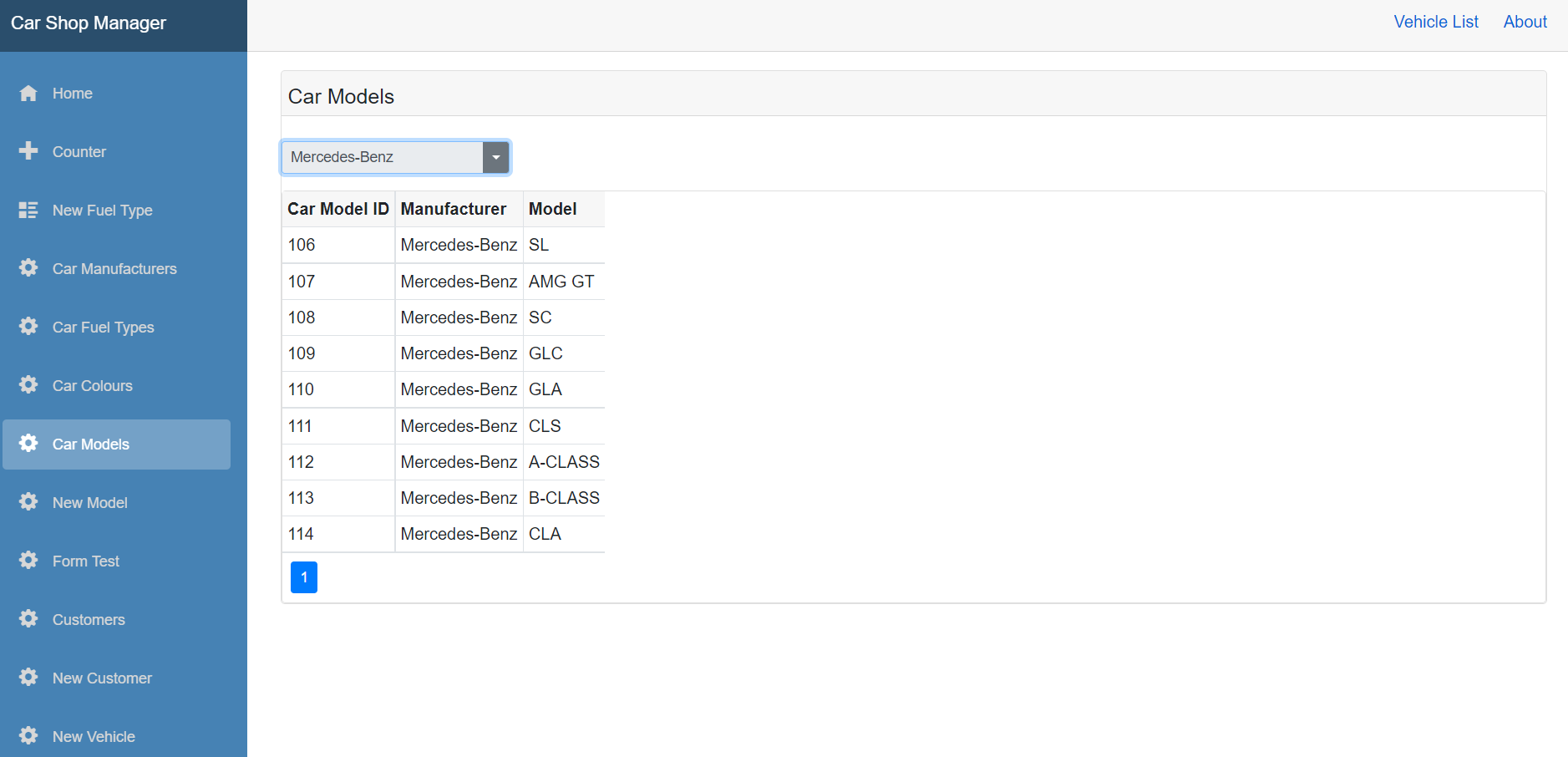
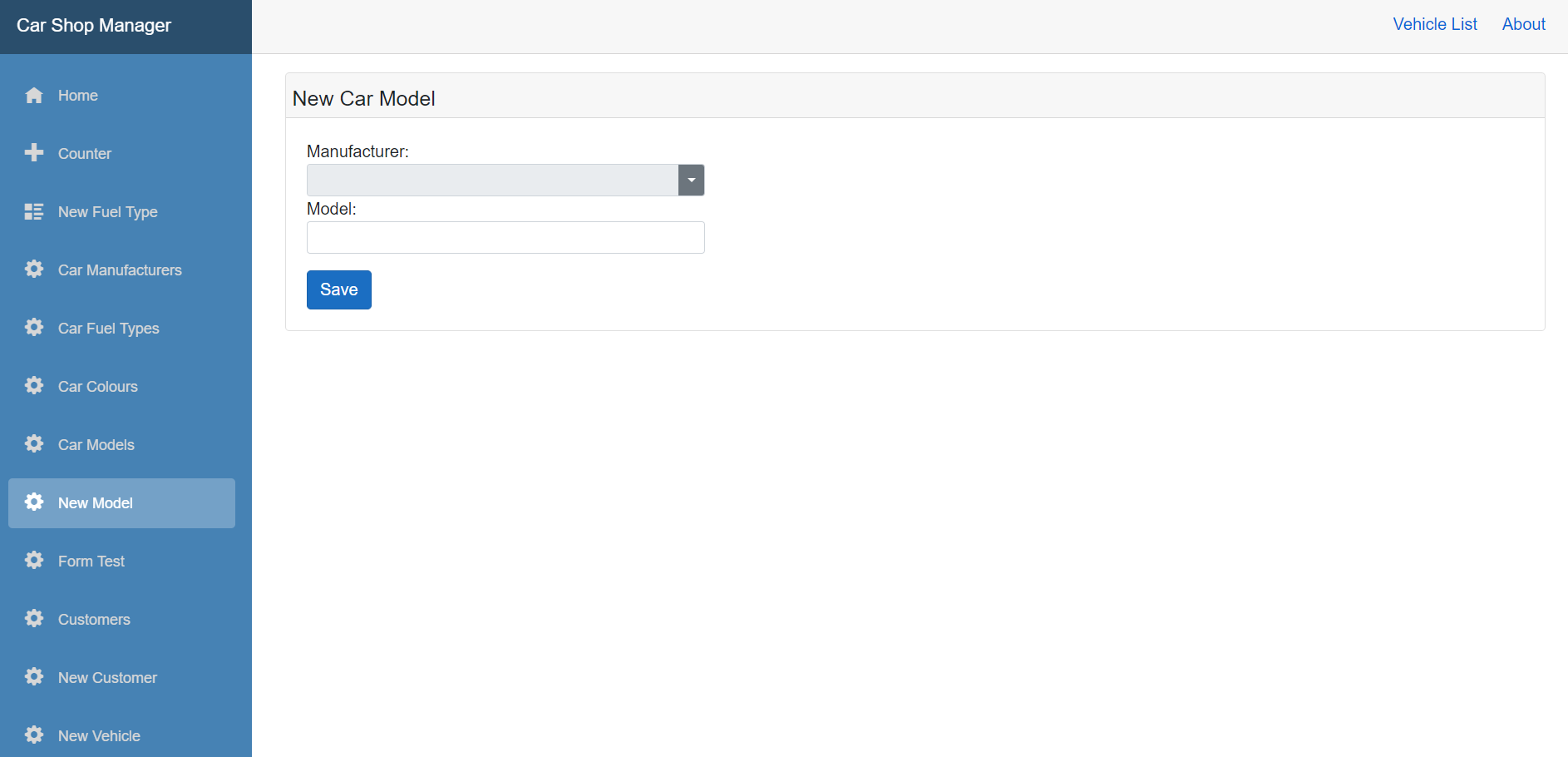
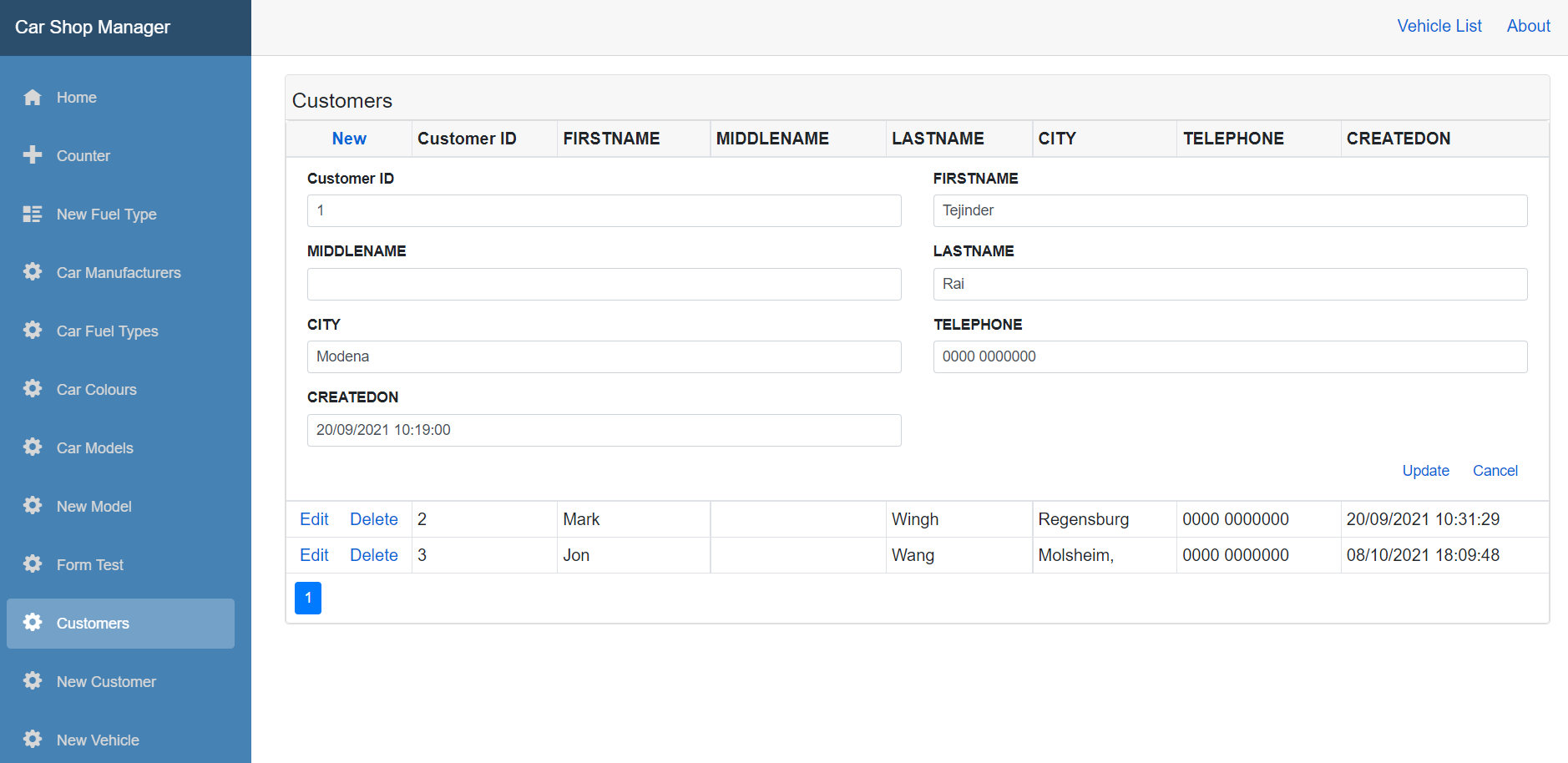
There are a few components I’ve built, which I have briefly described below that query/display the data loaded in the previous data seeding scripts. There are components with parameters that dynamically update child components, another which uses a NavigationManager to re-direct edit pages and others that utilise lists and display the entity model data in DevExpress UI components, including ASP.Net Blazor EditForm controls.

Hint: Click on each image and the browser will expand the image to the full size of the screen. This will give you the same view as seen in the my development environment.

Fuel Types – two components with a dynamic fuel type view when new fuel types are added.

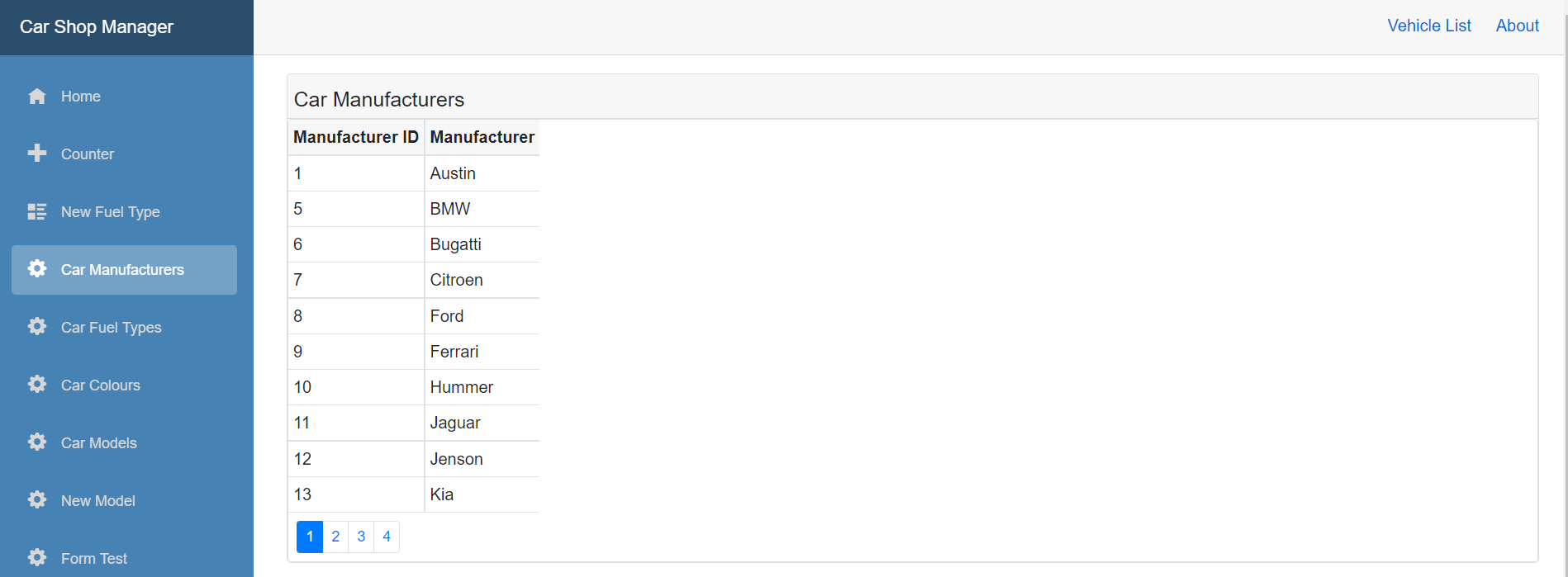
Car Manufacturer List

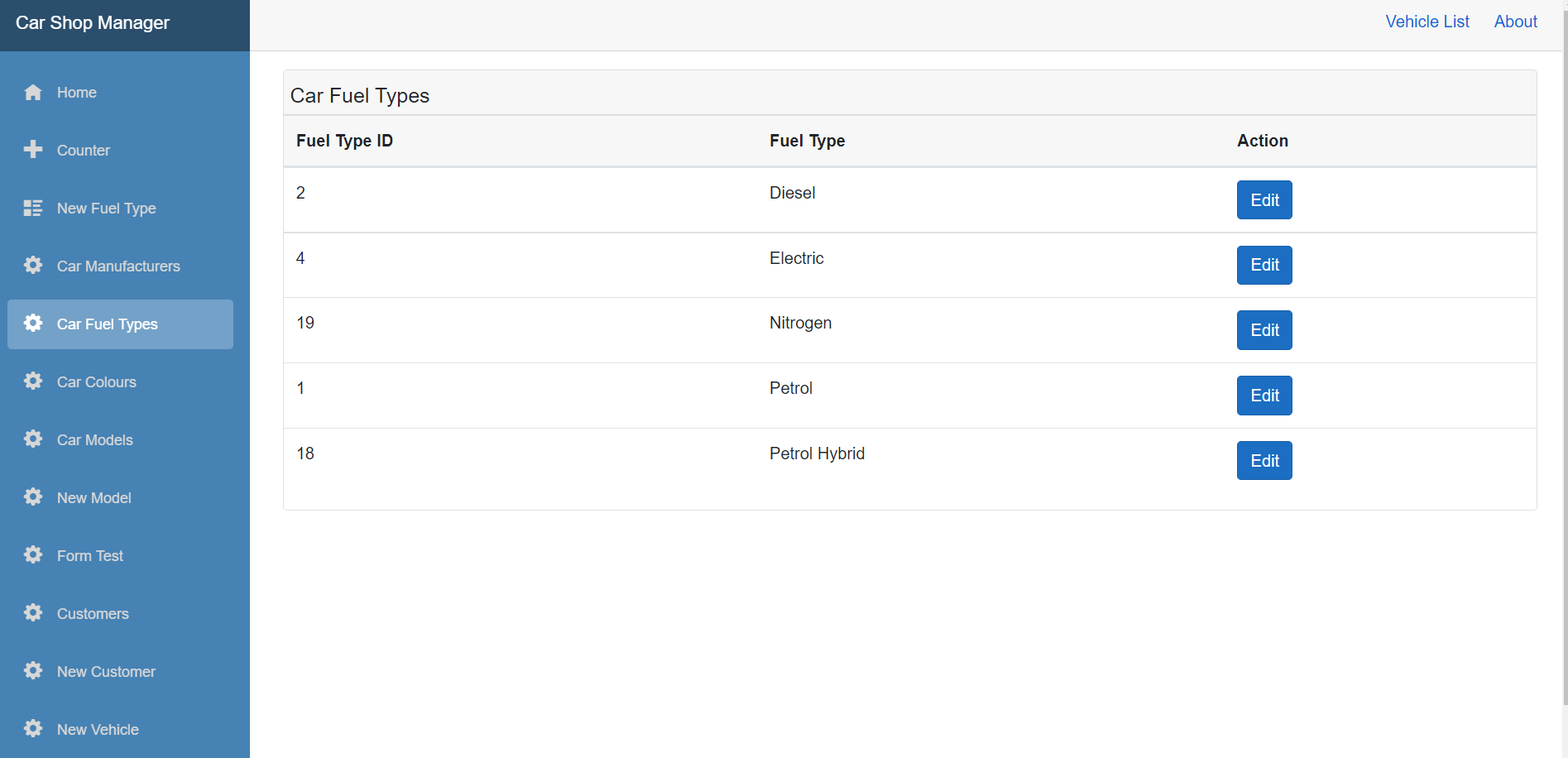
Car Fuel Types with edit functionality

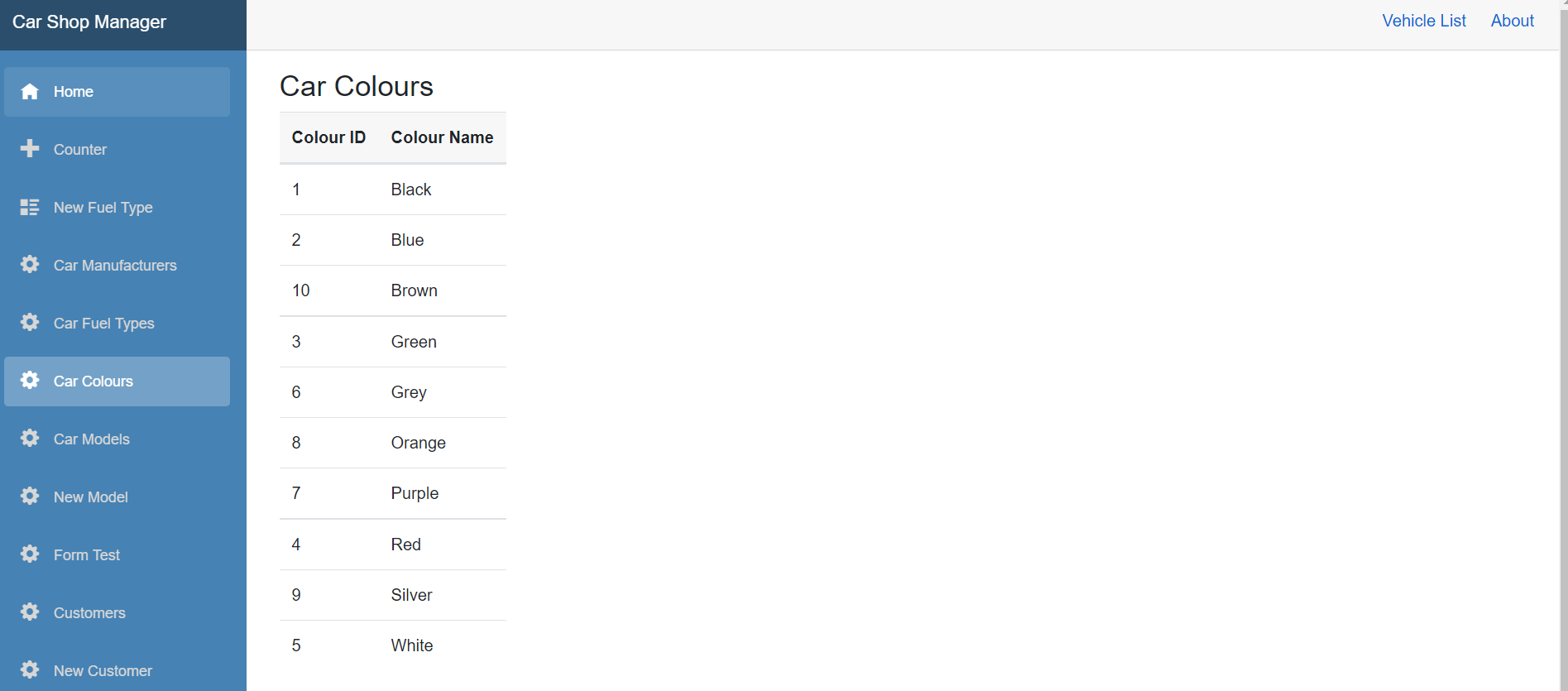
Car Colours

Car Models

New Car Model

Customer List – inline Edit Capability (DevExpress UI Component)

New Customer

New Vehicle

CarShop .NET Core Blazor Project – Part 5

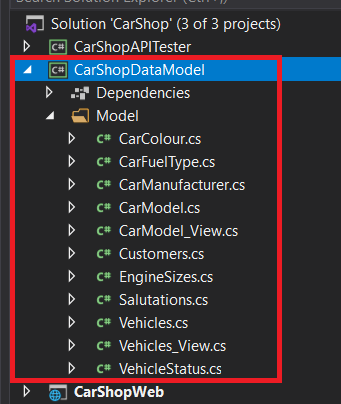
Following on from Part 4, where I provided the links to the CarShop views SQL, I have now published the C# project which defines the data model classes for the CarShop database tables and views. The data classes project has been separated into it’s own project as this will be shared as a dependency with the CarShop Blazor Server project and in future, I will develop the API’s in a separate project.

The project has been published on my GitHub repo here.

You can also follow the guidance from Microsoft to create model classes with the Entity Framework, documented here.

CarShop .NET Core Blazor Project – Part 4

Following on from Part 3, where I provided the links to the CarShop database seeding SQL, I have now published the database view SQL scripts in my public GitHub repo. At present there are two database views.

The database view scripts are listed below.

1 – CarModels_View.sql – provides view of car manufacturers and models.
2 – Vehicles_View.sql – provides a view of vehicles with column data vs foreign key identifiers

The CarShop database view SQL scripts can be found in my GitHub repo here.

It is likely that over the course of developing the project, the number of views will expand, hence the reason to separate out the location of the view SQL scripts as apposed to the database mode creation or data seeding SQL scripts.

CarShop .NET Core Blazor Project – Part 3

Following on from Part 2, where I provided the link to the CarShop schema deployment SQL, I have now published the database seeding scripts in my public GitHub repo, for the initial supporting data. At present there are six tables in the database which have data seeding scripts.

The data seeding scripts are listed below.

1 – EngineSize.sql – Inserts a list of engine sizes into the EngineSize table.
2 – Salutation.sql – Inserts a list of salutations for customers into the Salutation table (only basic salutations are loaded)
3 – CarFuelType.sql – Inserts the car fuel types for vehicles into the CarFuelTypes table
4 – CarColour.sql – Inserts a basic list of car colours into the CarColours table
5 – CarManufacturers.sql – Inserts a basic list of car manufacturers into the CarManufacturers table
6 – VehicleStatus.sql – Inserts a list of Vehicle status flags into the VehicleStatus table.

The CarShop data seeding SQL scripts can be found in my GitHub repo here.

CarShop .NET Core Blazor Project – Part 2

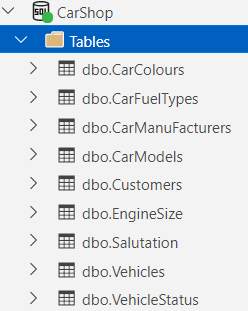
Following on from Part 1, where I introduced the CarShop project, I have now published the database scripts in my public GitHub repo, for the data model. At present there are nine tables in the database schema, which need to be created in a specific order to maintain relationships. The tables are listed below.

CarManufacturers – Table to hold all car manufacturer details

CarModels – Table to hold all car models

VehicleStatus – Table to hold the vehicle status e.g. “For Sale”

CarFuelTypes – Table to hold the fuel type for a vehicle

CarColours – Table to hold the car colours

Engine Size – Table to hold all car engine sizes

Vehicles – Table to hold all car vehicle details which has relationships to the above tables as per the Part 1 CarShop project blog post showing the schema diagram.

Salutations – Table to hold all customer salutations

Customers – Table to hold all customer details which has a relationship with Salutations

Some of the tables hold default e.g. Vehicles previous owners has a default of 1 since the vehicles are not new at the Carshop.

The CarShop model SQL scripts can be found in my GitHub repo here.

CarShop .NET Core Blazor Project – Part 1

Over the past few months I have been working on a sample project, which will eventually be published to my GitHub repo. The project specifically focusses on Microsoft Entity Framework with an Azure SQL database and also utilises Blazor as the underlying UI and logic layer, including DevExpress for Blazor UI components. This is an initial post which describes the project and it’s capabilities.

The CarShop project was envisioned from wanting to build something new and then work on multiple articles rather than only a few for a project, for part of this year. This will enable me to provide updates at various intervals and at some stage, including the publishing of the code.

Why a CarShop?

Since I am car fan and have been for many years, I thought this would be an exciting project to work on this year. With Blazor + .NET and DevExpress being some of my favorite development frameworks, I thought this would be ideal as a project.

The database schema

Since I am using the Microsoft Entity Framework in the Blazor Visual Studio project, the schema was exactly where I wanted to start. As the iterations developed, I decided to go straight into Azure SQL to provision my tables, entities and relationships, primary keys and foreign keys etc. The project needs to store car details (at a basic level), customer details, car manufacturers, car models, fuel types, engine sizes etc. Whilst it is a simple model to start with, it’s relatively simple to expand the schema as I see fit, both from the SQL backend as well as the coded elements and data classes.

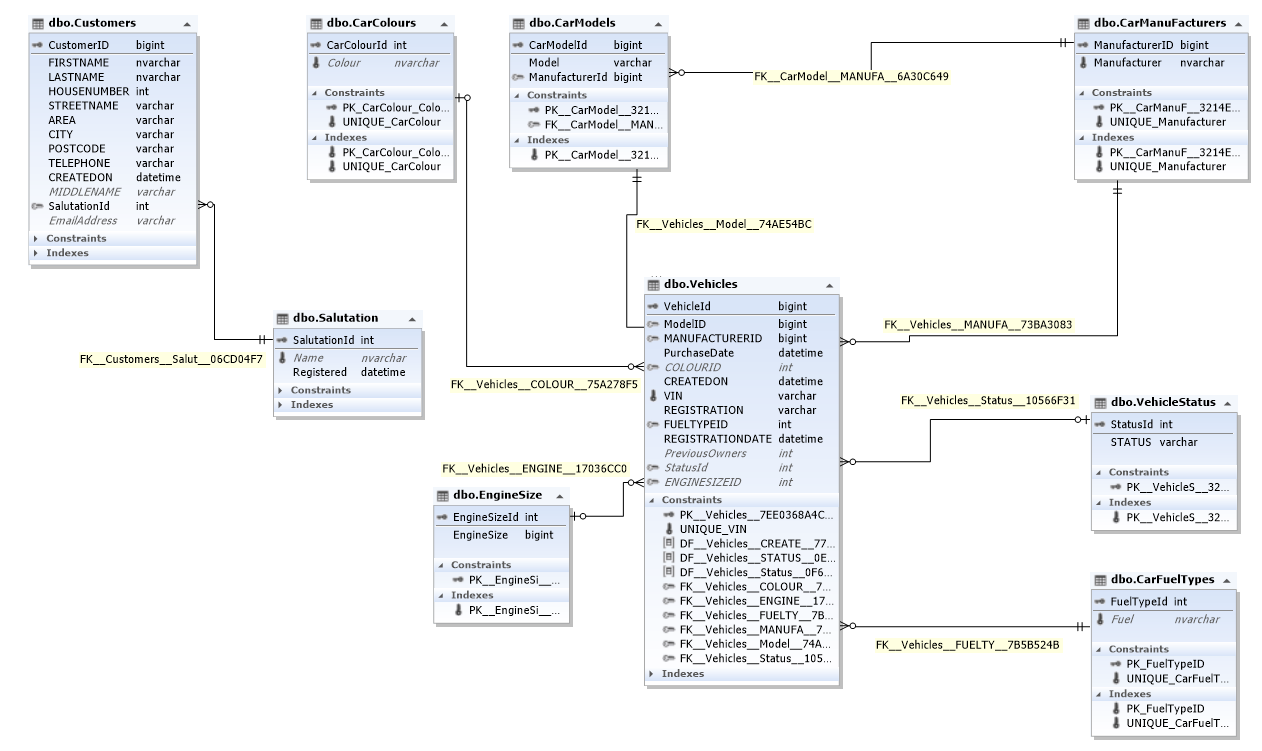
For this post I will show an example of the schema, which is below, produced by dbForgeStudio 2022 for SQL Server.

CarShop Schema – Developed using dbForgeStudio 2022 for SQL Server

Since this is a relatively simple sample project, the data is held in a single Azure SQL database. As you can see, the Vehicles table has the most relationships with car fuel types, vehicle status, engine size, colours, models and manufacturers. For the customers table, I’ve kept the design simple for now although I intend to expand this into a scenario where there may need to be some data quality checks and periodic checks around when the customer data was last updated, for reasons I will include in a future post.

Part 2 will focus on the Transact-SQL, so that the schema can be provisioned.

Architecture; how does it save money and reduce risk in an organisation?

Recently I was was asked how architecture saves money and reduces risk in an organisation. I had 15 minutes to present a simple answer and demonstrate an example of how high-level analysis improves overall costs and reduces the risks as well as explain the challenges.

I created a presentation to describe this topic, with the agenda below.

1 – What is Architecture?

2 – Business challenges without architecture?

3 – Why is architecture important?

4 – Real world example, shaping the architecture

5 – How architecture reduces risks and costs?

6 – The Endgame

The presentation is available to download here.

DVLA Vehicle Enquiry Service API

I’ve recently been developing a application for the car industry, to record vehicles, models, customer information, vehicle sales and storage of images etc. This is ASP.NET Blazor application which utilises Entity Framework Core, Microsoft Azure, Azure Web sites and Azure storage. One of the features I thought would really be interesting is for the car sales administrators to enter new vehicles into their stock and then dynamically have a component which allows them to query the vehicle information via the DVLA VES Web API.

Sometimes, to start with developing a component, I develop the component code outside of Blazor i.e. a Console application which can contains all the response structure, associated methods and calls the VES API with a HTTP client.

Now that I am finished with the basics of calling the VES web API, I can now expand this with all the necessary error handling e.g. HTTP error codes, and include this as a component within the Blazor application.

I’ve published the ASP.NET console application in my GitHub repo in the link below. You will need to request a VES API key and utilise your registrations, or set these as arguments in the console app, or just set a static string for this as it is in the current code.

DVLAConsoleAPICaller

If you prefer to perform a simpler test, I’ve provided a working PowerShell script below, you will just need to utilise your own API Key and set the registration as required.

$VehicleRegistrationNumber = "TE57VRN"
$APIKey = "[APIKEY]"
$DVLAURI = "https://driver-vehicle-licensing.api.gov.uk/vehicle-enquiry/v1/vehicles"
$Header = @{"x-api-key" = $APIKey} 
$RequestBody = @{"registrationNumber"= $VehicleRegistrationNumber} | ConvertTo-Json

Invoke-RestMethod -Method Post -Uri $DVLAURI -Body $RequestBody -ContentType "application/json" -Headers $Header